

Gas Hot Water Systems Adelaide
Gas Hot Water Systems in Adelaide: Choosing the Right Option
Selecting the best gas hot water system needs to suit more than the demand for hot water. The type of household you have, the size of demand, running costs and what type of gas connections you already have are important factors if you want to choose the right system for your Adelaide home. If you have an old gas hot water system, are looking at repairs, or want to know what to replace it with, read on.
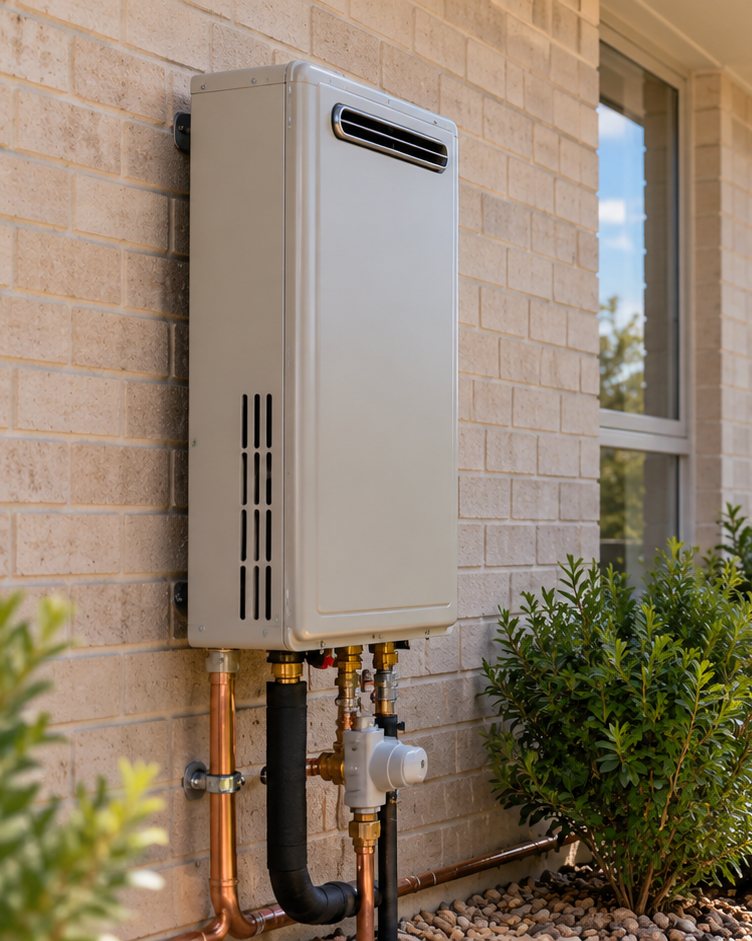
Gas hot water systems operate by heating water with natural gas or LPG. Adelaide houses can be fitted with either a storage tank unit or a continuous-flow system that instantaneously heats water when a tap is turned on. The most suitable system depends on the number of bathrooms, simultaneous demand and the available gas supply and installation space. Only licensed gas fitters should fix faults and install new replacements.
Contents
Gas Storage Versus Continuous Flow
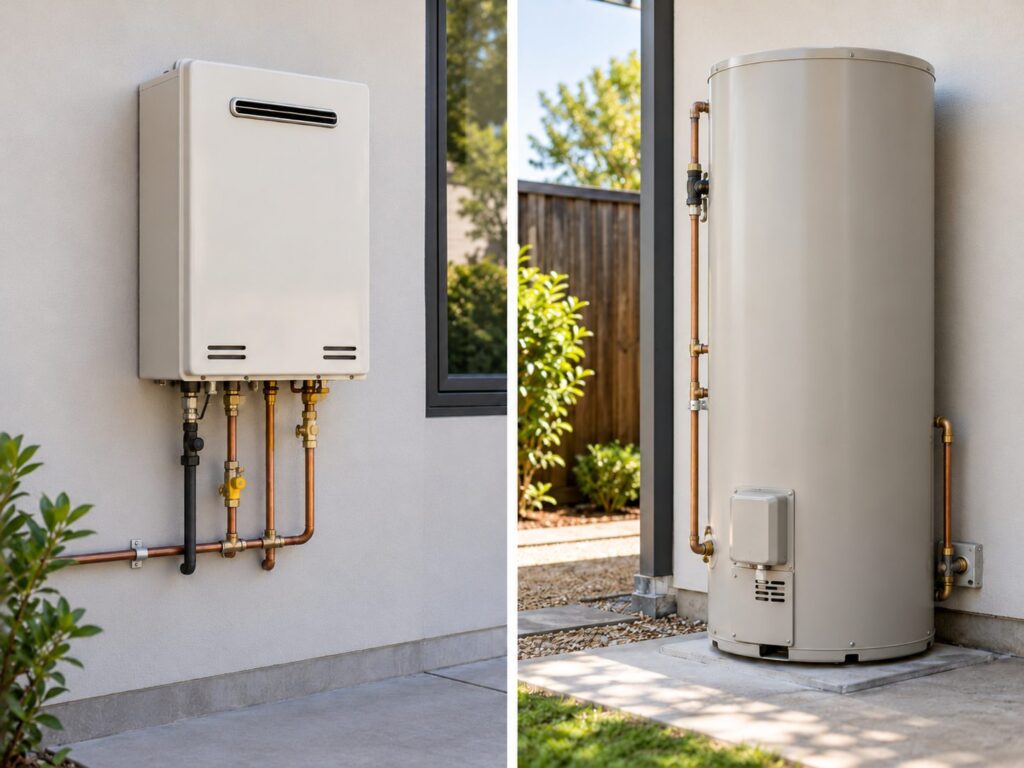
Storage tank and continuous-flow gas water heaters work differently to provide hot water. Understanding the difference can explain why your system runs out of hot water, takes a while to ignite or has difficulty when multiple outlets are in use.
Gas storage systems
A gas storage heater heats water in an insulated tank. There’s hot water available ready to use, but your stored reserve can run out if there’s high demand. The burner will need time to heat up another tankful. Tank size, recovery speed and usage all factor into the equation.
Continuous-flow gas systems
A continuous-flow heater heats water while it flows through the heater. Unlike tank heaters, there’s no big reservoir of hot water to exhaust. However, the appliance does have a maximum heating capacity. Two showers and a kitchen tap running at the same time can overload a smaller unit.
The Australian Government’s hot water guide explains storage vs instantaneous systems and the heat losses connected with a storage tank.
Common Gas Hot Water Problems
A gas hot water fault could stem from the burner itself, ignition components, incoming water supply, controls or related pipework. The symptom is helpful information to diagnose but rarely points to one cause by itself.
- No hot water: could be due to an ignition fault, lack of gas supply or an appliance control fault.
- Water that was hot becomes cold: could be higher demand for hot water than the heater can keep up with. Otherwise, the appliance may be broken.
- Leaking water around the unit: could be coming from a fitting, valve or tank.
- Pilot light repeatedly goes out: older pilot-operated appliances need professional inspection.
- Strange noises or coloured water: have a technician inspect the unit and plumbing.
If you suspect a gas leak indoors, evacuate the building. Do not operate light switches, appliances or telephones while indoors. Once safely outdoors follow the South Australian Government advice: turn off the gas and electricity at outdoor meters if safe to do so, contact a licensed gas fitter and do not re-enter until the home has been inspected.
Repair or Replace Your System?
Not every broken hot water heater requires a new one. A professional can look at the system, diagnose the problem and let you know if it’s reasonable to repair. Age and condition of the unit factor into it as well as part expenses.
Repair can make sense if everything else is working and the failed component can be safely replaced. Replacement makes more sense when a tank rusts out, you have recurring problems, or household need has outgrown the system capacity.
Get the repair or replacement recommendation in writing including details of the defect, job and cost. Consider the estimated remaining useful life if you get the unit repaired, versus the warranty and suitability of a potential replacement.
Choosing the Right Replacement
Your peak usage should be the most logical place to begin. How does your household use hot water during busy periods? Just because you have a large household does not mean you need the largest unit. Simultaneous demand, incoming water temperature and available gas supply can affect the recommended heater capacity.
- Count showers, baths and hot taps that may operate at the same time.
- Check whether the home already has natural gas, LPG or another energy source.
- Discuss outdoor placement, ventilation, pipework and access for servicing.
- Compare purchase, installation and ongoing energy costs, not the appliance price alone.
- Ask yourself if you should consider a heat pump or solar hot water instead of gas first.
For example, a home with two bathrooms may discover that a properly sized continuous-flow system will work for them if they typically run more than one shower at a time. Another household might just want an equivalent replacement for an already installed storage heater based on the make-up of their household and budget.
Gas isn’t always the lowest cost option. Fuel costs as well as efficiency of appliances and usage around the house factor into your operating costs. Assess your situation before replacing a working system just for the promise of saving money.
What to Check Before Requesting a Replacement Quote
Hot water pressure, distance to taps and simultaneous shower use can affect performance. A useful quote should describe the existing setup and explain how the proposed heater capacity matches peak household demand.
- Photograph the appliance data plate and its surrounding space.
- Make a note of which taps run out of hot water and if faults happen only at peak times.
- Ask whether the quoted work includes removal, connections, testing and compliance paperwork.
- Verify the model warranty, maintenance requirements and if another type of heater would be more appropriate for the home.
Gas Hot Water Installation in Adelaide
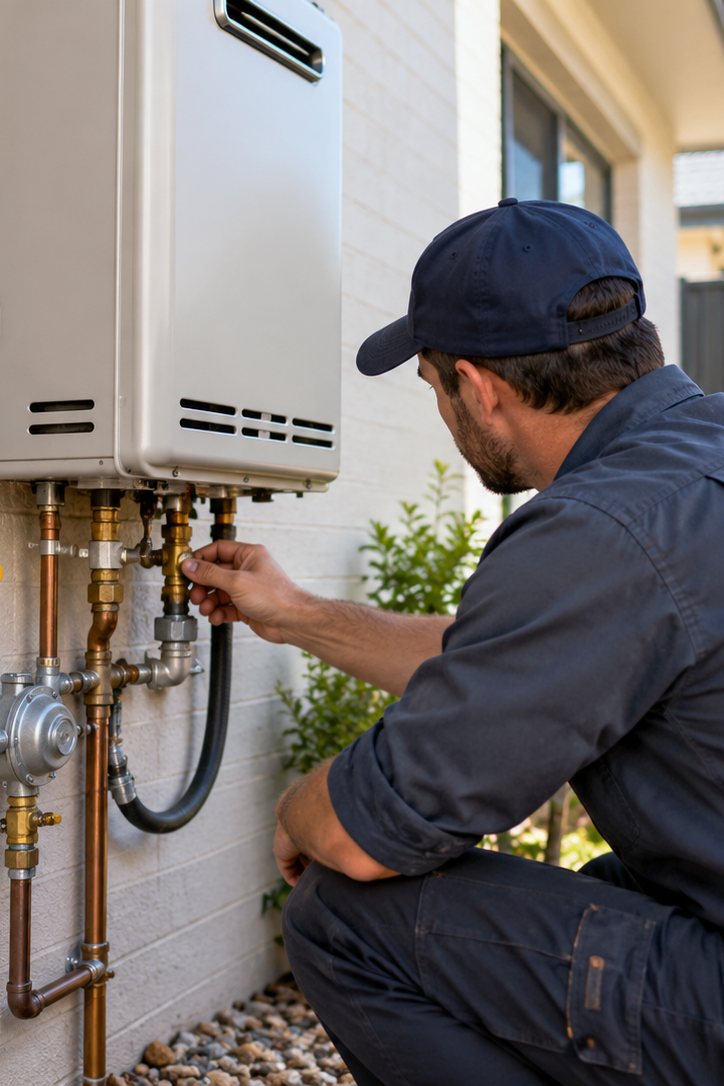
Installation of gas hot water systems should start with an assessment of the existing appliance, gas supply, water connections, flue or ventilation and location. The installer should make sure that the unit suits your property and complies with all current South Australian safety regulations.
Koala Plumbing installs, repairs and replaces gas hot water systems throughout Adelaide and the Adelaide Hills. As well as information on gas hot water systems, info on electric, solar powered and heat pump hot water services is provided so home owners can inquire about other options, instead of assuming their plumber will only suggest gas models.
The installation process generally includes the following stages:
- Inspect the old system and confirm the replacement requirements.
- Provide a quote that covers the appliance and necessary connection work.
- Isolate services, remove the old unit and install the replacement.
- Test operation, check safety and explain the controls and maintenance requirements.
A suitably licensed gas fitter must undertake gas appliance installation and gas pipework. In South Australia, gas appliance installation or replacement work also needs an electronic certificate of compliance.
Ask the tradesperson how they will provide the certificate once work is completed.
Sources
- South Australian Government, Report a gas leak, undated
- South Australian Government, Certificates of compliance, undated
- Australian Government, Hot water systems, undated
- Koala Plumbing, Hot Water Systems Adelaide, undated
- Koala Plumbing, Gas Connection Adelaide, undated
- Koala Plumbing, Contact, undated
Frequently Asked Questions
Gas Hot Water FAQs
A continuous-flow unit can heat water while it is flowing, however, there is a limit to the flow capacity. Proper sizing is important when multiple draws are used together.
Many faults can usually be fixed, depending on the make, component availability, and the appliance’s condition. Replacement may be a better option if the tank is leaking or badly corroded.
Conversion may be an option if an adequate gas supply exists and there is a compliant location to install. Price up the gas connection work vs electric and heat pump options.
Timing will vary depending on appliance type, access to the site, availability in stock and any alterations required to existing pipework. Koala Plumbing advertises a same-day installation option; however times and extent of works should be confirmed at the time of booking.
Making the Right Choice for Your Hot Water System
A consistent supply of hot water is something many people take for granted. When your hot water system breaks down, replacement isn’t always the answer. Depending on its condition and age and parts availability, you may be better off repairing your current gas hot water system.
If replacement is necessary, consider more than just the installation cost. Consider your family’s hot water usage, energy ratings, space available and operating costs when choosing a system. You might also want to weigh gas storage and tankless continuous-flow models against heat pump or solar hot water systems.
Get an expert to look at what you have and advise you. They can help you see what choices you have and prevent you from overspending on something you don’t need.
The only brands Koala Plumbing trusts









Areas of Service
We Go Everywhere in SA
We service all suburbs across the greater metropolitan area of Adelaide, including the Adelaide Hills.
